|
English only |
|
|
|
|
|
*
|
An institute organized as a network of independent laboratories reflecting complementary technological approaches; each laboratory collaborates with several others within the institute in addition to cross-disciplinary interactions on campus.
|
|
|
*
|
A campus that stands out as a premier technological university in engineering, computer science and basic sciences.
|
|
|
*
|
An intimate collaboration with the Blue Brain Project which stands out as one of the most challenging neuroscience simulation and databasing projects worldwide. |
|
|
*
|
A proximity to and joint affiliations of our faculty with top university hospitals in Lausanne and Geneva in particular for projects related to cognition and neurodegenerative diseases. |
|
|
*
|
A new initiative in neuroprosthetics to which the BMI is strongly committed that will further the collaboration with engineering sciences by a host of inspiring common projects. |
BMI's groups have access to a state-of-the-art imaging center, the Center for Biomedical Imaging (CIBM), created through a joint effort of EPFL, Geneva University (UNIGE) and Hospital (HUG), Lausanne University (UNIL) and Hospital (CHUV) and the Leenaards and Jeantet Foundations. The Center, distributed between HUG, CHUV and EPFL, includes high-end MR, PET, EEG and signal processing equipment. (Link to CIBM)
A feature of the Brain Mind Institute is that several faculty members have strong expertise in physics or mathematics; this holds not only for theoretical but also for experimental neuroscience. In this way the Brain Mind Institute reflects the mission of the School of Life Science: to provide a life science curriculum with a strong emphasis on quantitative approaches. As far as teaching is concerned, the BMI Faculty is committed to provide a comprehensive and formal training in neuroscience from the undergraduate to the graduate levels.
![]() |
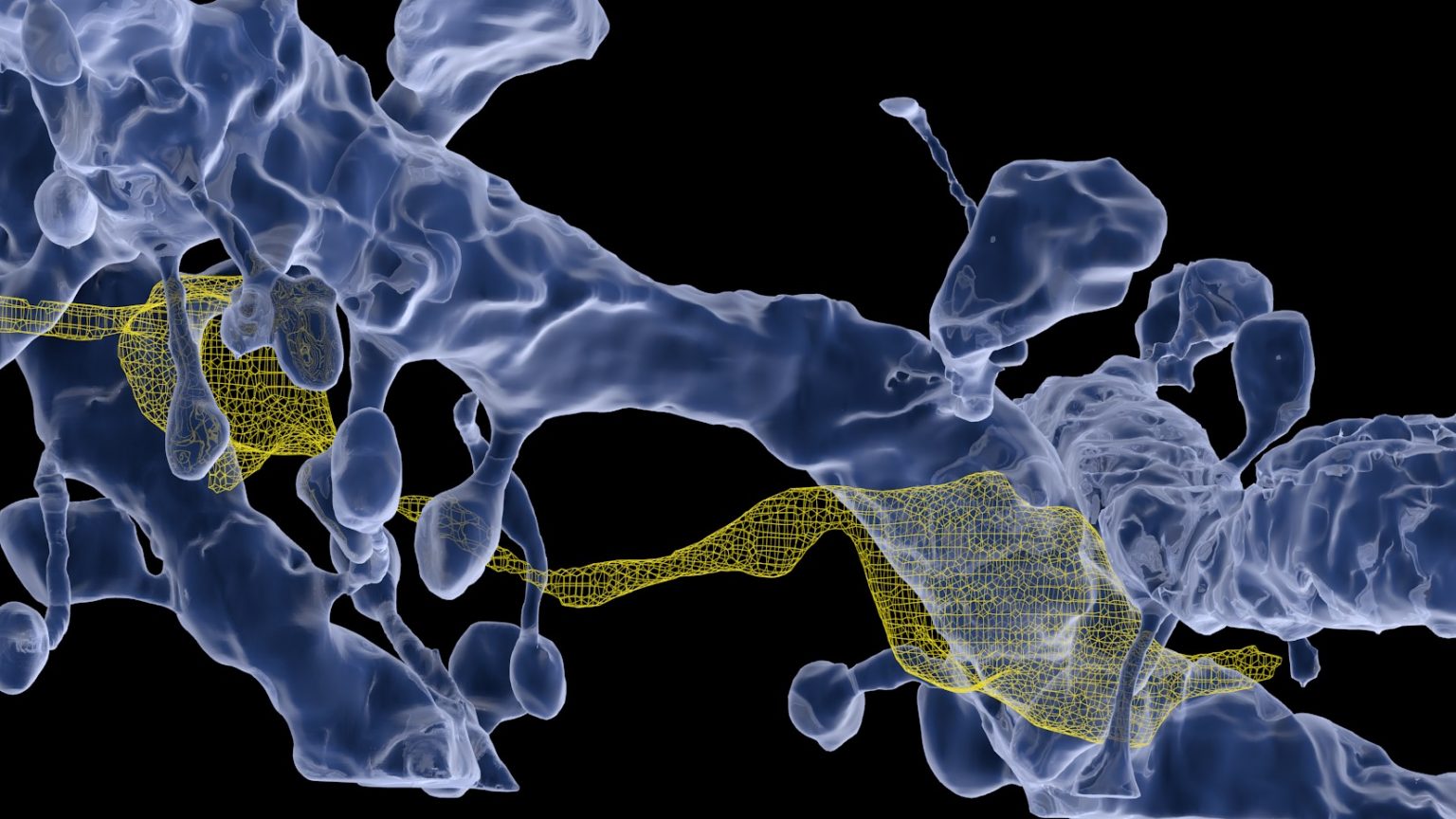
Carl petersen appointed associate professor / Dec. 2009 At its meeting on December 9-10, the Board of the Swiss Federal Institutes of Technology appointed Carl Petersen associate professor at the School of Life Sciences (FSV). Carl Petersen is one of the first tenure-track assistant professors hired by the Brain Mind Institute (BMI), the mission of which is to understand brain function at the molecular, cellular and cognitive levels using methods ranging from experiments to modeling. His work exemplifies the School of Life Sciences mission: not only does he address issues that are among the most pressing and complex in the neurosciences, he also develops and uses highly innovative techniques, such as in vivo imaging. |
![]() |
It's all in your head. No, really: How mental imagery training aids perceptual learning/ Dec. 2009 Practice makes perfect. But imaginary practice? Elisa Tartaglia of the Laboratory of Psychophysics at Switzerland's Ecole Polytechnique Federale de Lausanne (EPFL) and team show that perceptual learning-learning by repeated exposure to a stimulus-can occur by mental imagery as much as by the real thing. The results, published in Current Biology, suggest that thinking about something over and over again could actually be as good as doing it. |
![]() |
Stress at learning facilitates memory formation / NOV. 2009 Although stress is frequently regarded as deleterious for cognition, there are many instances in which a certain stress level can facilitate learning and memory. Dr. Lisa Conboy and Prof. Carmen Sandi (LGC-Laboratory of Behavioral Genetics) have underscored key molecular mechanisms related to the synaptic trafficking of glutamate receptors whereby stress experienced at learning facilitates memory formation. |
|
17/02/2010
at 12:15 |
Speaker: Jason Kerr, Max Planck Inst. for Developmental Biology Tübingen, Germany
Host: Prof. Gerstner Room: SV1717a |
BMI Director
Prof. Pierre Magistretti
BBP Director
Prof. Henry Markram
Admin. BMI
Egizia Carbone
Emilie Pralong
Admin. BBP
Christiane Debono
Address :
EPFL SV BMI
SV 2513
Station 19
CH-1015 Lausanne
Phone: +4121 693 9695
Fax: +4121 693 5350
E-mail:
brain_mind@epfl.ch